Wedding Invitations: What They Actually Need to Include (And What You Can Leave Out)
Your wedding invitation is the one piece of stationery that's genuinely non-negotiable. It's the formal request for your guests to join you, and it needs to give them the essential information to actually show up.
But the wedding industry has convinced couples that invitations need to be complicated, multi-piece suites with separate cards for every tiny detail. Let me tell you what your invitations actually need to include, and what you can skip without anyone caring.
The Essential Invitation Information
Every wedding invitation must include:
Who's getting married. Your names, obviously. How you present them (first names only, full names, with or without titles) is entirely up to you and what feels right for your celebration.
Who's inviting guests. Traditionally this was the parents hosting, but modern invitations reflect all kinds of family structures. You might host yourselves, have both sets of parents host together, or acknowledge multiple family members. What matters is being inclusive and authentic to your situation.
The date and time. Be specific. "Saturday, the fifteenth of June, two thousand and twenty-six, at two o'clock in the afternoon" is traditional formal wording, but "Saturday 15th June 2026, 2pm" works perfectly well and is clearer for guests.
The venue. Include the venue name and location. You don't always need the full address on the invitation itself (you can put that on a details card or your website), but guests need to know where they're going.
How to RSVP. Whether that's returning a card, responding via your website, or contacting you directly, make it clear what you need guests to do and by when.
That's it. Those five things are non-negotiable. Everything else is optional.
Information You Can Include (If Relevant)
The following can be added to your invitation if you want to keep what you send simple, or these are the perfect bits of information to include on an accompanying details card.
Dress code. If you have specific expectations (black tie, semi-formal, casual), tell your guests. If you don't care what people wear, you don't need to mention it. "Come as you are" or omitting dress code entirely sends the message that guests should dress appropriately for a celebration without strict requirements.
Reception information. If your ceremony and reception are in the same location, you might say "reception to follow" or "followed by dinner and dancing." If they're in different locations, include the reception venue name and address.
Accommodation suggestions. If you've arranged room blocks or have recommendations, you can mention this briefly or direct guests to your website for details.
Gift preferences. This is contentious. Traditional etiquette says gift information doesn't belong on invitations. Modern practice sometimes includes a discrete note about a gift list or preference for contributions over physical gifts. My take: if you include it, keep it brief and gracious. Better yet, put detailed gift information on your website and just reference it.
What You Definitely Don't Need
Separate ceremony and reception cards. Unless your reception is at a completely different location hours later, you can include all the information on one invitation. Separate cards are a tradition from when wedding breakfasts were smaller than evening receptions, but most modern weddings invite the same guests to everything.
Response cards with pre-printed choices. You can use them if you want, but a simple RSVP card (or digital response) asking guests to confirm attendance and note any dietary requirements is sufficient. You don't need checkboxes for meal choices months in advance.
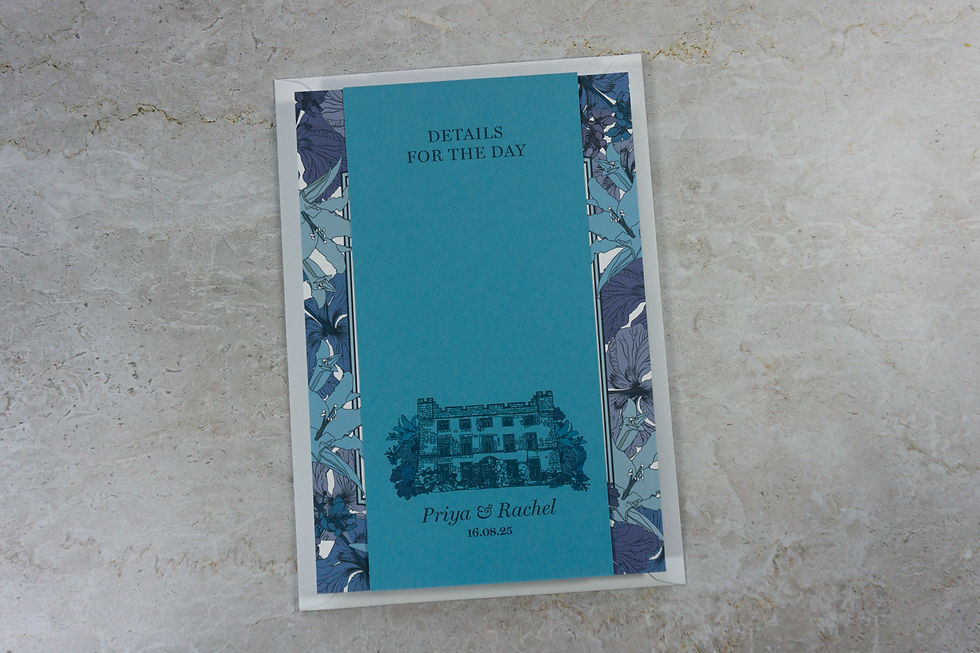
Direction cards. In the age of Google Maps, printed directions are largely redundant. You can put detailed directions on your website, or include them only if your venue is genuinely difficult to find. If you'd like to add an extra special touch for your details card we offer custom map illustrations if you feel it would genuinely benefit your guests.
Accommodation cards. Again, this information works better on a website where you can keep it updated and include links. A brief mention on your invitation or details card is enough.

The Case for Simplicity
Here's what I tell couples: every additional card in your invitation suite is another thing to print, another thing to assemble, another thing to fit in the envelope, and another cost.
More importantly, it's more information for your guests to process. Multiple cards scattered across the kitchen table are easier to lose and more confusing than one clear invitation with all the essential information.
If you can fit everything on your main invitation (front and back if needed), do that. It's clearer, more sustainable, and more cost-effective.
When Additional Cards Make Sense
There are times when a details card genuinely helps:
Complex schedule. If your wedding has multiple events across different days or locations, a separate card with the full schedule makes sense.
Detailed travel information. For destination weddings or venues requiring specific travel arrangements, a details card can include information that would clutter your main invitation.
Very formal weddings. If you're having a traditional formal wedding where etiquette matters to you, the multi-card format might feel appropriate.
Design preference. Sometimes the design looks better with information split across cards. If aesthetics matter to you and budget allows, that's a valid reason.
Format and Size
A5 invitations are the most common size in the UK and work well for most weddings. They're substantial enough to feel special without being impractically large.
A6 invitations are slightly smaller and can work beautifully for more intimate or casual weddings or simpler designs. They're also more cost-effective to produce and post.
Most invitations are single-sided, but printing on both sides lets you include more information without additional cards. It's a practical way to keep your suite simple while including everything guests need.
Wording Matters
The language you use on your invitation sets the tone for your wedding. Formal invitations use traditional wording and are written in third person. Casual invitations might use first person and more relaxed language.
There's no right or wrong here, just what feels authentic to you. A laid-back garden party deserves different language than a black-tie manor house wedding.
What matters more than formality is clarity. Your guests need to understand what you're inviting them to, when and where it's happening, and what you need from them.

Inclusive Language
Consider how your invitation wording includes all your guests. Traditional gendered language ("Mr and Mrs") might not suit everyone invited. "Mx" is an inclusive title option, or you can skip titles entirely.
When referring to plus-ones, "and guest" is clearer than outdated assumptions about marital status. When addressing families, be specific about whether children are invited or be prepared for questions.
The Bottom Line
Your invitation needs to be clear, complete, and reflective of your celebration. It doesn't need to follow every tradition or include every piece of information the wedding industry suggests.
Think about what your guests actually need to know to attend your wedding and we will put that on your invitation. Everything else is optional.
Need help creating invitations that are clear, beautiful, and authentically you? Get in touch at info@thoughtfullywild.com or visit thoughtfullywild.com to see my collections.